


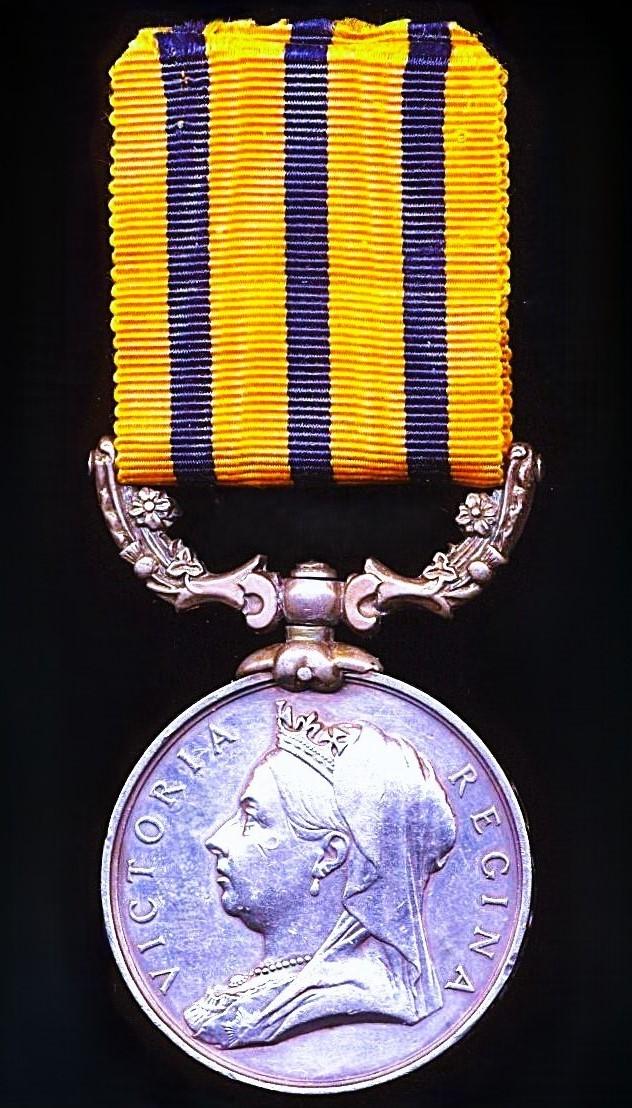
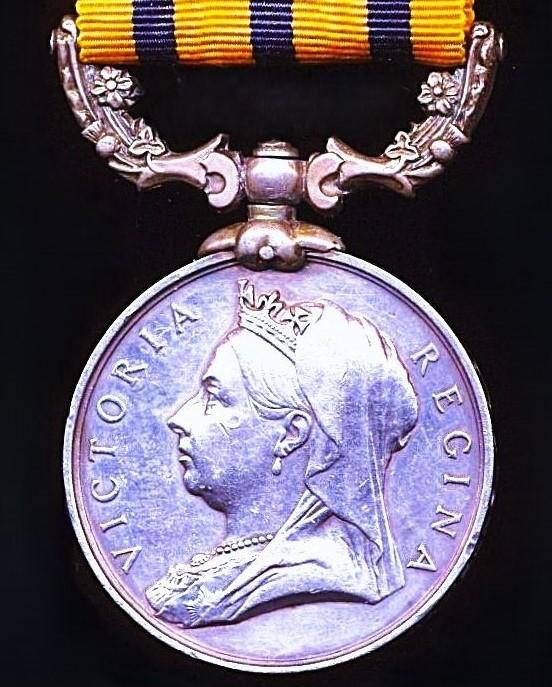
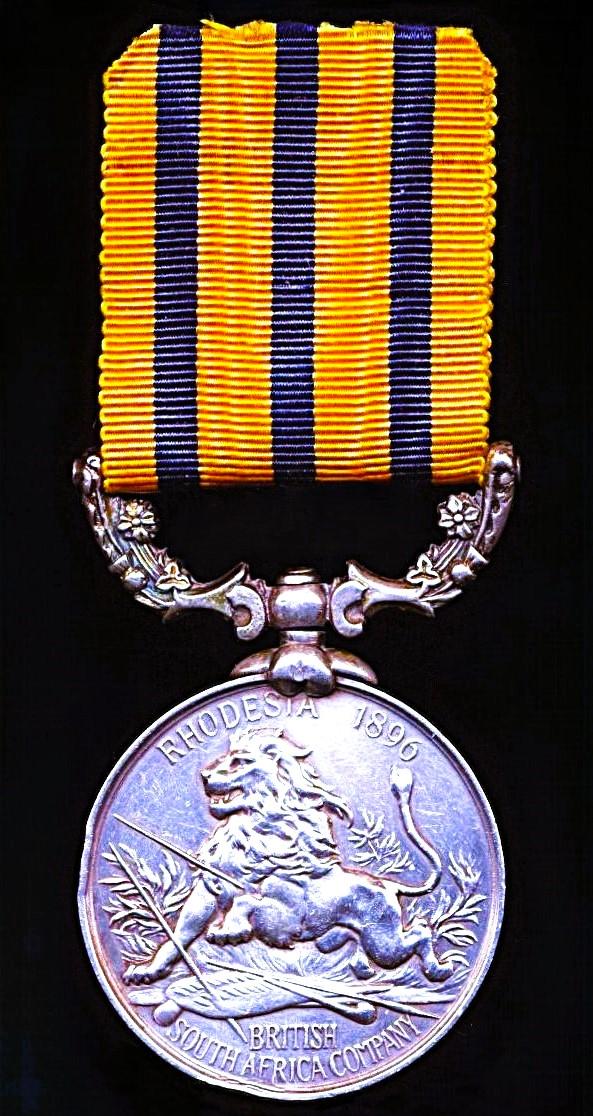
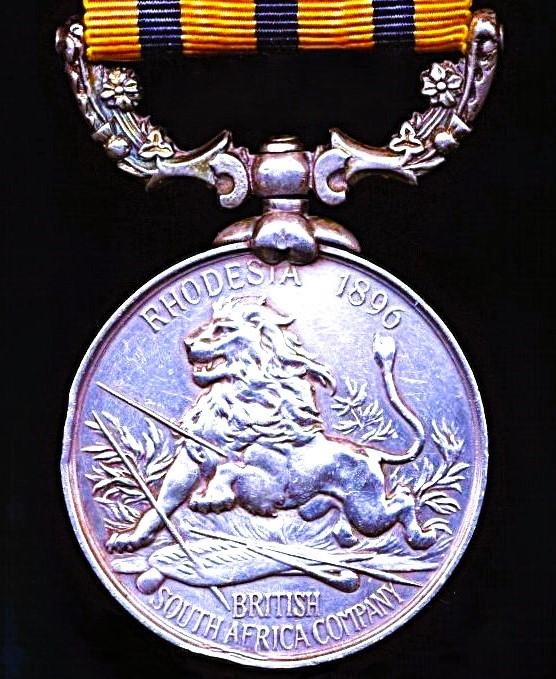
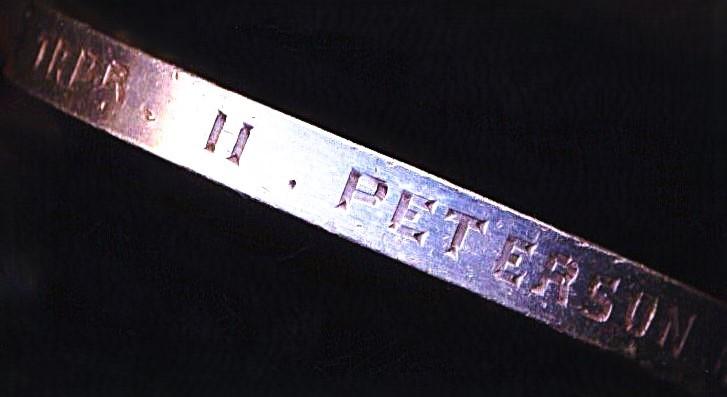
British South Africa Company Medal 1890-97. Reverse 'Rhodesia 1896'. No clasp (Trpr H. Peterson. Robertsons. C.B.C.)
The recipient 'H. Peterson' - a unique name in his corps - was holding the rank of Trooper while serving with Robertson's Cape Boys Corps
Medal Verification: The recipient is confirmed entitled to the British South Africa Company Medal with 'Rhodesia 1896' reverse per the respective campaign medal roll of the Robertsons Cape Boys Corps (reference the searchable transcribed medal roll (file series WO 100/77) that is accessible on-line at the website www.angloboerwar.com)
Reference 'British Battles & Medals' (Spink, seventh edition 2006), Robertson's Cape Boys Corps were awarded an estimated 187 x 'Rhodesia 1896' medals
For combat service & fighting prowess, medals awarded to Robertson's Cape Boys Corps, are amongst the most desirable of units that earned the BSA Company medals awarded for the Matabeleland Campaign 1896-97, where they served with distinction in the Matopos Hills of Rhodesia. The British newspapers of the era, were fairly peppered with references and mentions of this colonial unit. For example, the below period-piece (!) article that was published in the 'South Wales Echo' issue of 20 August 1896;
Quote,
COURAGEOUS "CAPE BOY'S."
The "Cape Boys" mentioned so frequently for their plucky conduct in Matabeleland are half-castes, originally from the Western Province of the Cape Colony, but now to be found in every part of South Africa. The majority of them are as intelligent, say, as the average English agricultural labourer, and amongst them are some of the finest drivers and riders in the world. Though for some reason, which South Africans themselves cannot explain, they are familiarly termed "boys", they are full grown adults, some of them of fair physique, but rarely tall. Although used as camp attendants, muleteers, &c., during previous South African campaigns they have not specifically been used for aggressive purposes. The Major Robertson who raised the corps of them now in Rhodesia was formerly an officer of the Inniskillings, and rose from the ranks, but for some years has been living in Johannesburg. Nearly all the "boys" had been cabdrivers in Kimberley and Johannesburg.
Unquote.
On such type-articles were British readers informed about the colonial raised units that fought and won the Matabeleland Campaign for the British South Africa Company
Baden-Powell: The founder of the Boy Scout Movement, honed his scouting skills and fieldcraft during the Matabeland Campaign of the Rhodesia Rebellion 1896-97 - in particular in the Matopos Hills during which he made extensive use of Robertson's Cape Boys Corps. For Baden-Powell's eye witness accounts and appreciation of the 'Cape Boys Corps' see his published narrative vis 'The Matabele campaign, 1896; being a narrative of the campaign in suppressing the native rising in Matabeleland and Mashonaland' (R. S. S. Baden-Powell, London 1897)
Scarce seen to this small distinguished colonial corps
Condition: VF
Code: 26025
495.00 GBP