


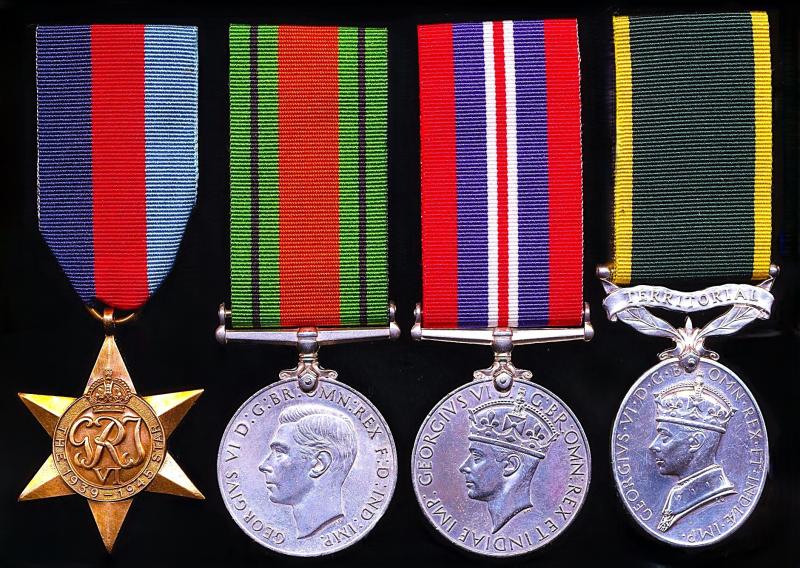
A confirmed Pipe-Major's Second World War era 'Fall of France 1940' campaign & long service medal group of 4: Sergeant John McKenzie Royal Regiment of Artillery late Pipe-Major 4th (City of Aberdeen) Battalion Gordon Highlanders
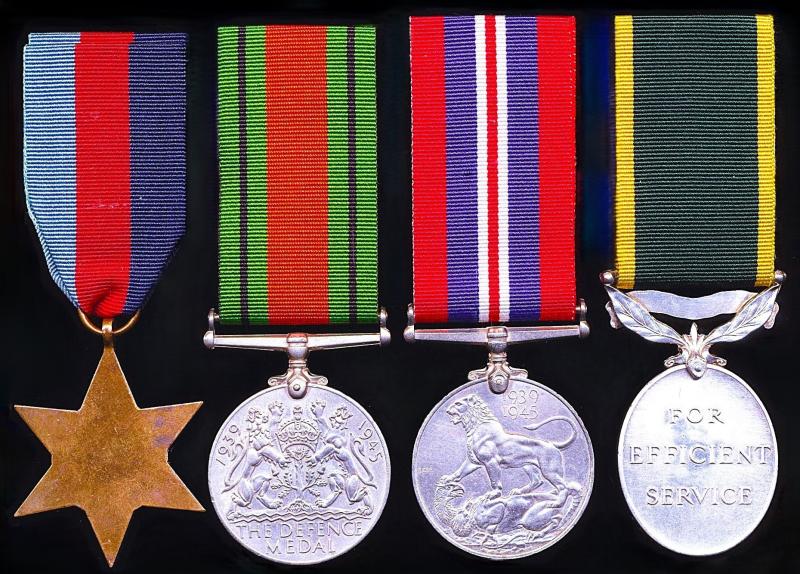
The group of 4 x medals comprise:
- The 1939-1945 Star. No clasp
- Defence Medal
- War Medal
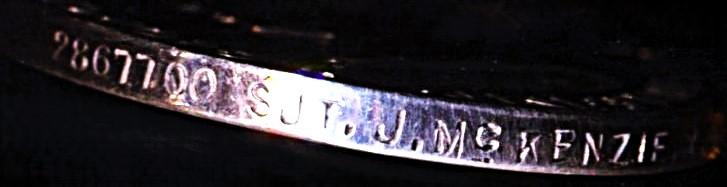
- Efficiency Medal. GVI second issue with 'Territorial' bar (2867700 Sjt. J. McKenzie. R.A.)
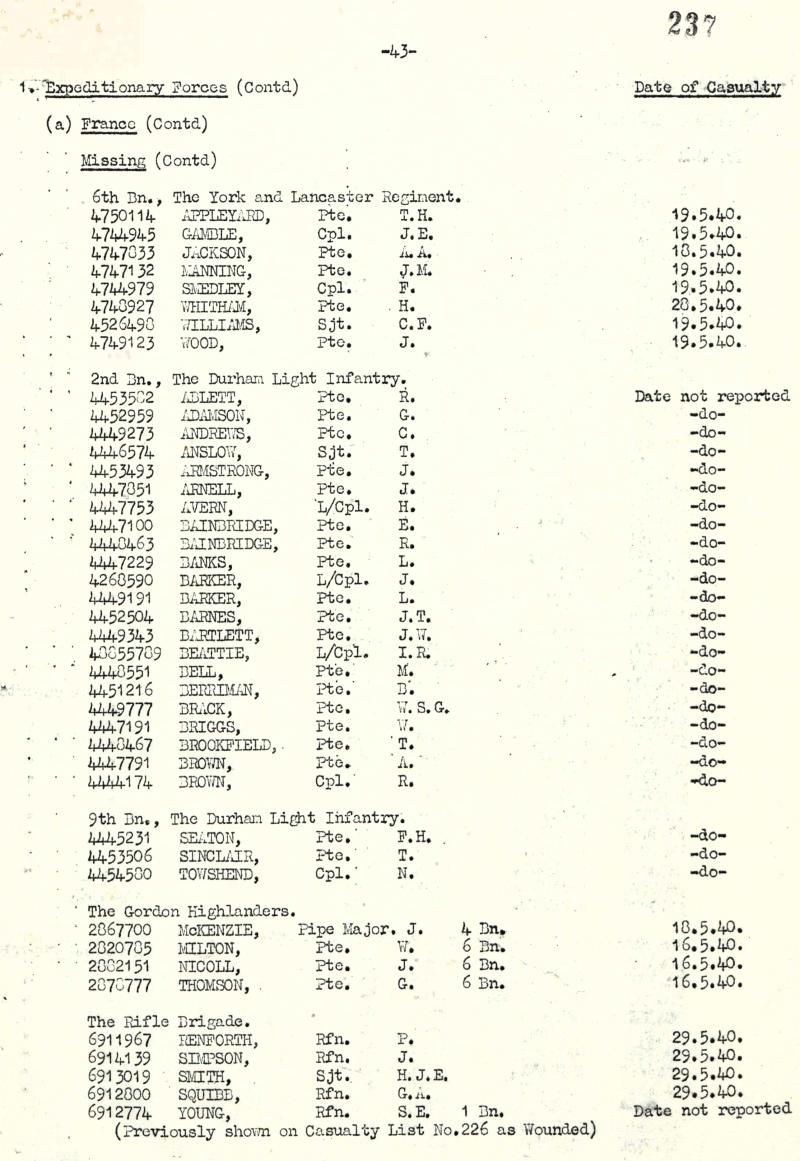
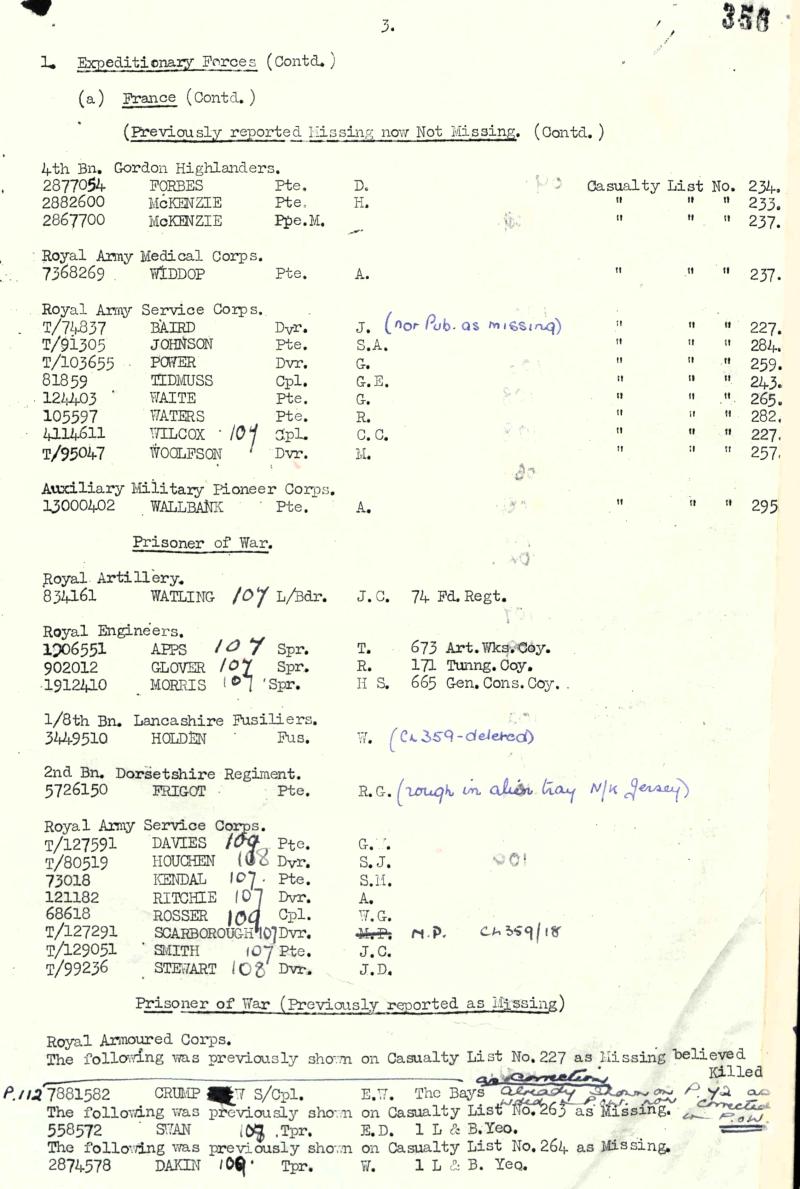
Pipe-Major 'Missing' France 1940: British Army official Second World War casualty lists record 2867700 Pipe-Major J. McKenzie 4/Gordons as 'Missing' on date 18 May 1940 - later reported 'Not Missing' (see attached images for the casualty list entries)
Pipe-Major McKenzie first appears in No. 227 Casualty List (Other Ranks) which is a list of all casualties reported to the War Office casualty section in the 48 hours ended 9 a.m., 10 June 1940. He is next mentioned in No. 356 Casualty List (Other Ranks) which is a list of all casualties reported to the War Office casualty section for the 24 hours ended 9 a.m., 9 November 1940
Basis above it is evident that Pipe-Major James McKenzie 4th Gordons, was missing in action from 18 May 1940 almost certainly posted as a casualty of the fighting at on that date. Pipe-Major McKenzie was subsequently evacuated from the Dunkirk beaches in June 1940, however his casualty status was only changed / recorded by the War Office on a list published on 9 November 1940
On return to the United Kingdom, Pipe-Major McKenzie's unit was converted to a Royal Artillery unit, and he remained on 'Home Service' in the United Kingdom for the rest of the Second World War
Medals Verification: Second World War medal rolls for the British Army, and indeed all British Armed Forces are no in the public domain as of 2026. The recipients entitelment to all medals is however confirmed per below sources:
- The 1939-1945 Star. No clasp: 1 days service on strength of a unit in France 10/05/1940 -19/06/1940
- Defence Medal: Awarded for 3 years aggregated 'Home Service' 1939-45
- War Medal: Awarded for 28 days uniformed service in the British Army 1939-45
- Efficiency Medal. GVI 'Territorial': 12 year service (war service counts double). Served 1932-1947
John McKenzie, who was a native of Aberdeen, first enlisted in the British Army on 23 November 1932, when he was posted to the 4th (City of Aberdeen) Battalion Gordon Highlanders, a Territorial Army unit. On enlistment he was allocated the unique Army number 2867700, which was in the block 2865001-2921000 allocated to the Gordon Highlanders in 1920, and from which numbers were sequentially issued to all new Army enlistees who were first posted to the Gordon Highlanders circa 1920-41. By 1940, John held the rank of Sergeant and the coveted appointment of 'Pipe-Major' - the leader of the 4th Gordons Pipe Band. After surviving the Dunkirk Campaign of 1940, he served the rest of the Second World War on home-service, with the 92nd (Gordon Highlanders) Anti-tank Regiment, R.A. Post-war, John took his discharge on 30 April 1947, and next day re-enlisted in his old corps, the Gordon Highlanders!
See item code for the Great War medals& silver war badge to what may be John's older brother (the medals came from a local source), James McKenzie who was wounded in 1918, and who became a Prisoner-of-War
4th (City of Aberdeen) Battalion Gordon Highlanders: In 1938, this TA battalion was converted from an infantry role when they were selected to become the Machin-Gun battalion of the 51st Highland Division, and re-styled 4th (Machine-Gun) Battalion Gordon Highlanders. In September 1939 the battalion was mobilized for 'War Service', and in October, were informed that they were no longer the MG Bn of the 51st Highland Division, but became the very first TA battalion to serve with the BEF in France, where from October 1939, they became 'G.H.Q.Troops', and comprised four companies each of 12 x Vickers Guns. The regimental history records that the Gordon's Machine-Gunners suffered casualties during the Dunkirk campaign of 1940: 9 x Killed, 29 x Wounded & 4x Officers & 171 x 'Other Ranks' missing. After their evacuation from the Dunkirk beaches in June 1940, the survivors (19 x Officers & 466 x 'Other Ranks') were re-assembled at Willsworthy Camp, where they were re-equipped and brought up to strength with reinforcement drafts. At the end of August, the battalion was awarded the below following decorations for gallantry in the Dunkirk campaign:
- Military Cross: x 3
- Distinguished Conduct Medal: x 1
- Military Medal: x 3
Posted to the 54th Division as the MG Battalion, the Gordon's Machine-Gunners were converted to an 'Artillery; regiment, when on 1 November 1941, they were styled as 92nd (Gordon Highlanders) Anti-tank Regiment, R.A. In their new artillery role the unit continued to serve with 54 Division through to 1944, when later in that year they were posted to the 9th Armoured Division.. The 92nd (Gordon Highlanders) Anti-tank Regiment, R.A. remained in the United Kingdom through to the conclusion of the Second World War
A most desirable group of medals to a confirmed Pipe-Major of the 4th (Machine-Gun) Battalion Gordon Highlanders
Condition: About GVF
Code: 26095
250.00 GBP